RESEARCH & TEACHING CRITICAL THINKING
  • Home
  • AI and Education
  • Higher Education Topics - Blog
  • Applied and Experiential Learning - Blog
  • Research & Teaching Critical Thinking - Blog
  • About
  • Media Coverage
  • Experiential and Applied Learning Examples
    • Experiential Learning Vietnam 2017
    • Monopoly for Teamwork
    • Learning in Hanoi
    • Hanoi Community Service
    • Saigon Starbucks Experience
    • Saigon Class Concert
    • Outside the Classroom

Skills Students Need - Importance of Experiential Learning

5/26/2022

0 Comments

 
Picture
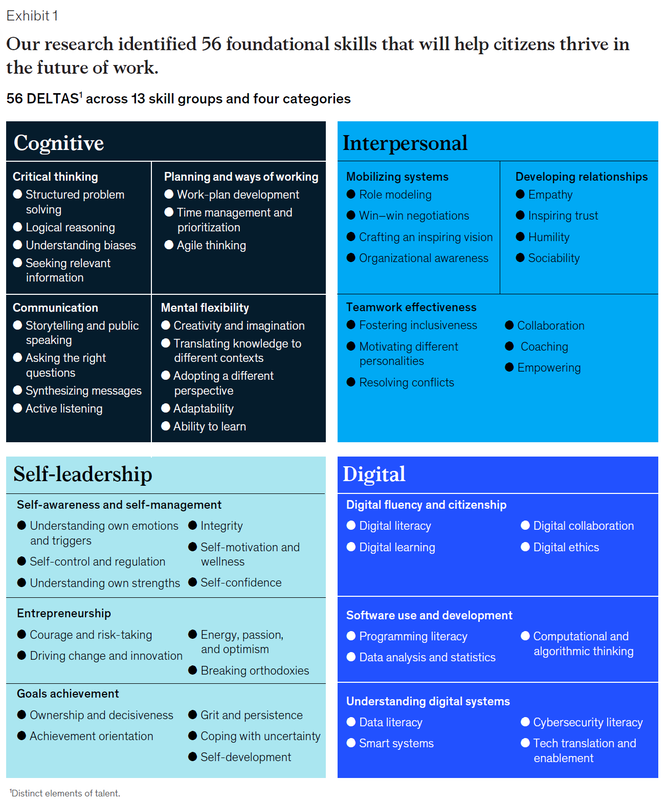
McKinsey: These are the skills you will need for the future of work. This graphic appears in the article on Page 3 as Exhibit 1.
My recent research has explored the contrasts between teaching using exclusively lectures and exams and teaching using experience associated with the material students are learning. This is important because I believe that students learn and remember what they do better than what they read, cram, and regurgitate on exams. I believe that students need to internalize what they are learning so that they will be able to apply this to their future lives and careers.

The broadest term for this is experiential learning. Governments globally have recognized that education should evolve to teach the skills and competencies students will need - in addition to teaching the basic academic content. Here are two examples:
  1. Canada establishes a Pan Canadian Global Competencies Framework for Education: http://www.ibe.unesco.org/en/news/canada-establishes-pan-canadian-global-competencies-framework-education
  2. 21st Century Competencies - Singapore Ministry of Education: https://www.moe.gov.sg/education-in-sg/21st-century-competencies

In 2021, McKinsey published an article listing 56 foundational skills students should develop to prepare for their lives and careers. The article, titled "McKinsey: These are the skills you will need for the future of work," is available online at https://www.weforum.org/agenda/2021/06/defining-the-skills-citizens-will-need-in-the-future-world-of-work/. The introduction states:
"To future-proof citizens’ ability to work, they will require new skills—but which ones? A survey of 18,000 people in 15 countries suggests those that governments may wish to prioritize."

As a teacher, I continuously search for ways to help my students develop at least some of these skills while they are learning the academic material in my courses. Students whose prior education comprised almost exclusively lectures and exams become frustrated with the activities that require them to develop and employ these skills. By the end of a semester, some students finally get what they were doing and benefit from their work. Sadly, many students are so resistant that they don't understand. Yet all of these students will enter the workforce, where they will need these skills.

Understand why you teach the way you do so that you can explain it to your students.

Tell your students why you teach the way you do.

#ExperientialLearning #21stCenturyCompetencies #SoftSkills
0 Comments

"All SUNY, CUNY schools shifting to online learning to combat coronavirus"

3/11/2020

0 Comments

 
Picture
My observation: The Wuhan Coronavirus and its Covid-19 illness are creating a watershed moment in how people meet, conduct business, and learn. I doubt we will return fully to prior behaviors after this settles.

Breaking News (from The Buffalo News)

"All state university campuses will shut down on March 19 to try to reduce density levels of students who could spread the novel coronavirus among people on and off college grounds.

"The remaining weeks of the spring semester for the 64-campus State University of New York will be offered through online course work, Governor Andrew M. Cuomo said Wednesday afternoon.

"'That will be a way to reduce density and that’s a good thing,' Cuomo said.

"The order will also affect the City University of New York system."


https://buffalonews.com/2020/03/11/all-suny-cuny-schools-shifting-to-online-learning-to-combat-coronavirus/

#covid-19 #coronavirus #education #businessmeetings #travel #socialchange #onlinelearning #elearning
0 Comments

UNC Asheville Marketing Students working with non-profit OM Sanctuary

1/23/2020

0 Comments

 
Picture
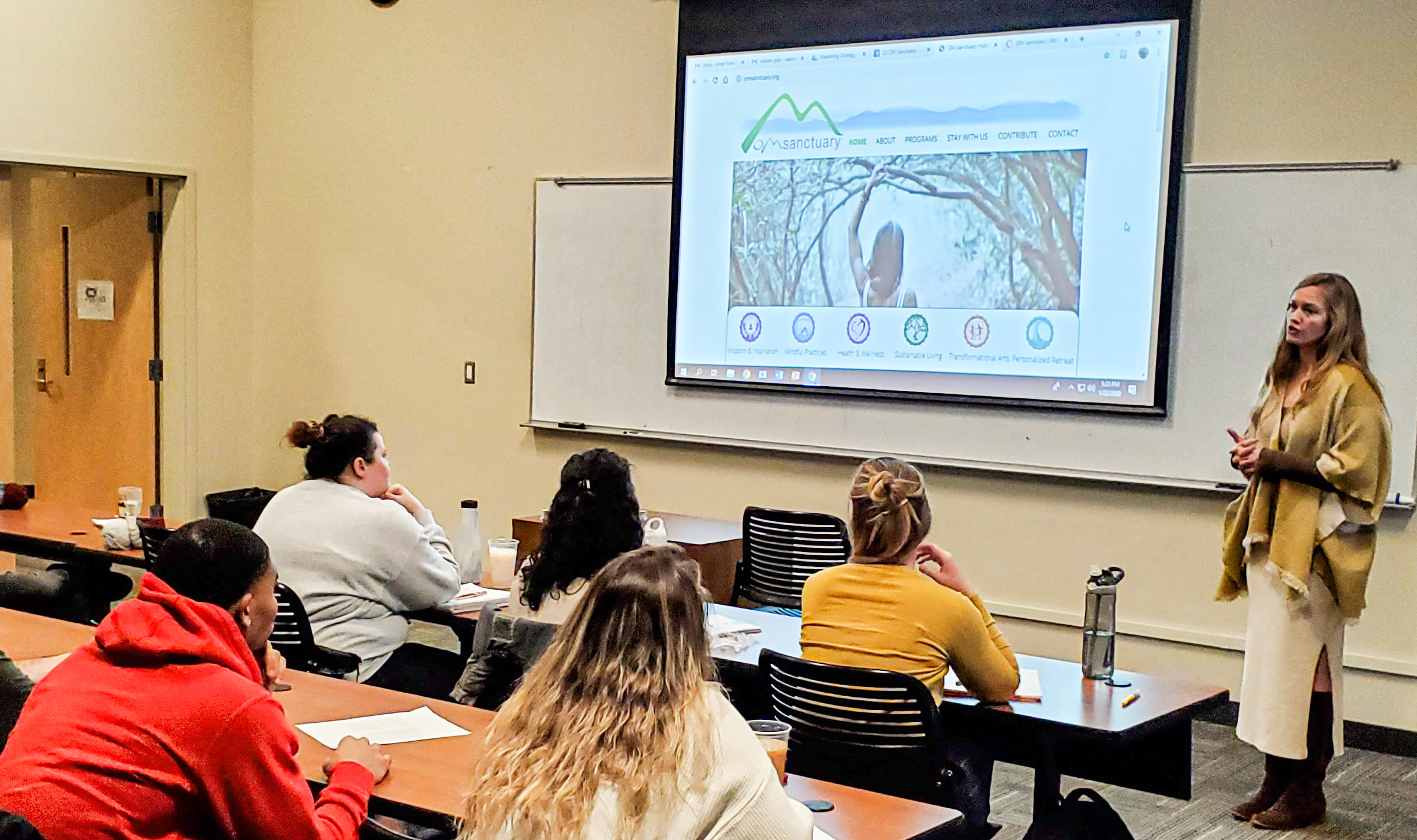
Thank you to Mary Liske, Wellness Coordinator, for a hugely productive and engaging conversation with our UNC Asheville Marketing Promotion students last night.

Three teams of Marketing Promotion students will develop promotional campaigns for non-profit OM Sanctuary during this semester in a process called Project-Based Learning. They will be applying what they are learning in the course as they work with OM Sanctuary as their Integrated Brand Promotion (IBP) client to meet the client's goals.

Project-Based Learning is one form of experiential learning. In this Marketing Promotion course, the students work all semester to develop an Integrated Brand Promotion campaign to support goals set by OM Sanctuary.


OM Sanctuary is officially known as Oshun Mountain Sanctuary. This non-profit organization was formed in 2012 as a response to the increasing number of people of all ages, cultures, and income levels seeking holistic and healthy methods for stress reduction, living in balance, embracing sustainable practices, and bringing inspiration into their personal and professional lives.

#projectbasedlearning #experientiallearning. #omsanctuary #uncasheville #maryliske #universityofnorthcarolina #asheville #integratedbrandpromotion

0 Comments

Your Next Career Might be in Higher Education

12/20/2019

0 Comments

 
Picture
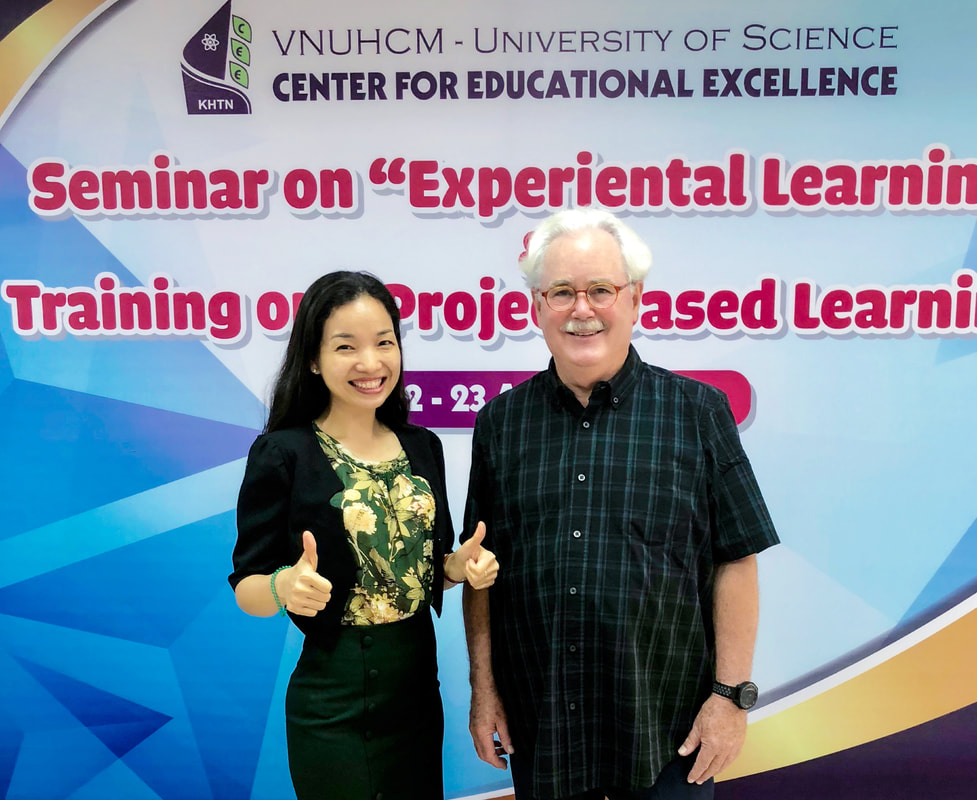
Delivering an experiential learning seminar at the University of Science in Ho Chi Minh City, Vietnam, 2018.
If you are like me and have had a great multi-decade career in professional roles, and you are not ready to settle into a quiet retirement, then consider teaching. Although I have not explored teaching in K-12 programs recently, that could be an option. A few years ago, I applied to Teach for America, went through hours of interviews, to the very last one-on-one interview, and then was not selected. I suspect age is the reason. I decided not to bother with K-12 after that, as I already had a couple years of higher education teaching experience in China, Vietnam, and the U.S.A. Stick with me here and I'll share an excellent resource at the end of this post.

My point here is that you should have better chance in higher education. This is especially so if you have years of senior leadership experience in your field, had at least a Master's degree, and want to help the next generation by teaching what you know, and sharing your experiences. My secondary point is that ageism is real. I've experienced it first-hand. In one instance, sitting in a final face-to-face interview for a government agency, I was told a couple times that, and I quote, "You are over experienced for this position." The fact that I drove 10 hours to attend the interview, was interested in the position, and had all of the skills required to do the job, meant nothing. 

In another instance, after another 10 hour drive to the final face-to-face interview, the exact words, which I heard three times from the hiring manager, were, "This is a developmental position." Once again, I was fully qualified, interested, and could have been a perfect candidate for the role. But that hiring manager, and the previous one, clearly wanted someone younger in their positions. Neither of these were teaching positions.

Age is less of an issue for adjunct instructors in higher education. In some cases, the experience you have had will help you get the position. Adjuncts are underpaid, but if you aren't in it for the money, the satisfaction of helping a new generation of professionals develop more than offsets the low pay. It is possible that an adjunct role could lead you to a full-time position. What you might find difficult, as I have, and where ageism may come into play, is when or if you apply for tenure track positions. While I haven't had the blatant comments like the ones above, I perceive the difficulty in getting hired into a tenure-track position due to my age as real, and I've basically stopped trying. 

I like and enjoy my contract teaching roles. They have taken me to China, Singapore, Vietnam. I've taught for three schools in Buffalo, NY. Currently, I'm halfway through a one-year contract with the University of North Carolina in Asheville, a beautiful - and quirky - mountain city. If your professional career is over - if you aren't ready to settle too much - and if you like helping younger people develop -consider teaching in higher education. Here is a website with tips for older people who want to teach. It addresses the ageism issue directly in its recommendations.

From the Higher Education Recruitment Consortion:


https://www.hercjobs.org/higher-education-job-search-tips-for-older-employees/
0 Comments

"How drone racing teaches suburban kids about math, science"

4/30/2018

0 Comments

 
Picture


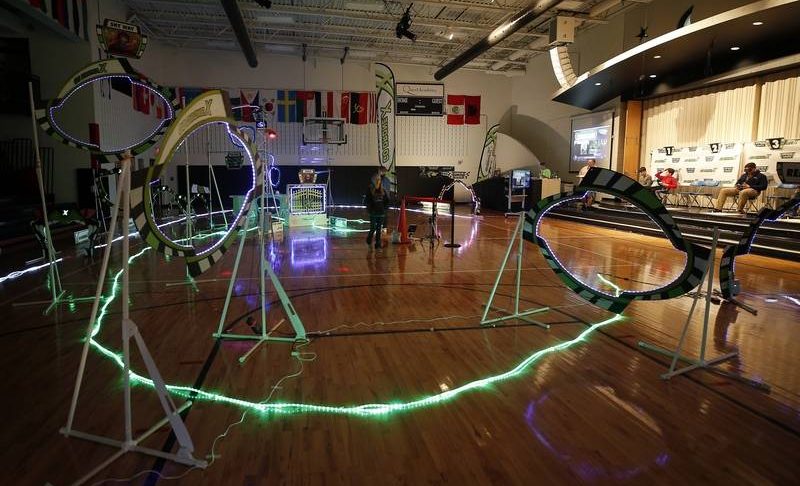
Brian Hill | Staff Photographer | Daily Herald

The following article excerpt is from UAV Expert News. A link follows the excerpt for the full article.


"Gregg Novosad is in his second year offering drone competitions to students who have worked during club meetings to learn to fly through a technology called FPV, or first-person view. The setup allows racers to view a screen or put on a pair of goggles and watch a live video feed from their drone, as if they’re onboard.

"Novosad said his league aims to train students in the STEM (science, technology, engineering and math) skills needed to fix a common problem: broken drones.

“'Keeping these drones flying is critical,' said Novosad, whose 16-year-old son, Brett, is involved in racing. 'Kids aren’t necessarily good. They break these things … So that’s step 1 of STEM — how do you fix it?'"


http://www.uavexpertnews.com/2018/04/drone-racing-teaches-suburban-kids/

0 Comments

Building drones to learn stem

4/15/2018

0 Comments

 
Picture
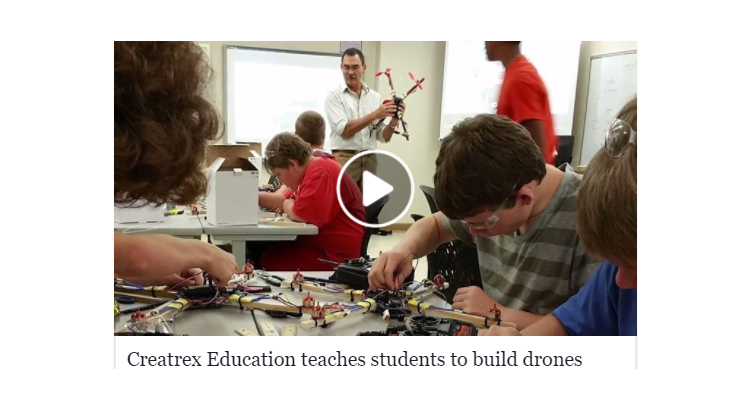
The image above is not linked. Click here to view the video.
Building Drones to Learn STEM

STEM is Science, Technology, Engineering and Math. This video illustrates an experiential learning activity - building drones - to learn about STEM subjects by creating a complex device. Take a minute and a half to watch the video and discover this program.


https://www.youtube.com/watch?v=dxGA2BLDiJM

Following is an excerpt from the article that reported on this program. Click here for the link to the original article.

Article Excerpt

Creatrex Education is a relatively new company, arriving on the scene in 2012 with an interesting mission: Get kids excited by science, technology, engineering and math, or STEM.

Their plan is to get kids to build flying drones at school. Creatrex representatives will come to interested schools and guide teachers in building drones to fly in their gyms.

Creatrex co-owner Terence Fagan said there are three model kits. The first is a basic snap-together model designed for fourth- and fifth- graders. The second, created for middle school students, introduces soldering and software to the mix. The high school version is made of metal and is a more complex, powerful model.

While robotics clubs exist in schools across the globe, Creatrex hopes their flying drone projects will pique the interest of even more potential STEM majors.

“The big thing that they’re learning is confidence,” Creatrex co-owner Gerald Holt said, “as well as working through failure and difficult situations. So, at the end of it they should have the skills that a hands-on engineer would need.”

Administrators interested in the drone program can contact Creatrex directly at
http://www.creatrexeducation.com/. 
0 Comments

Monopoly as experiential learning

3/26/2018

0 Comments

 
Picture
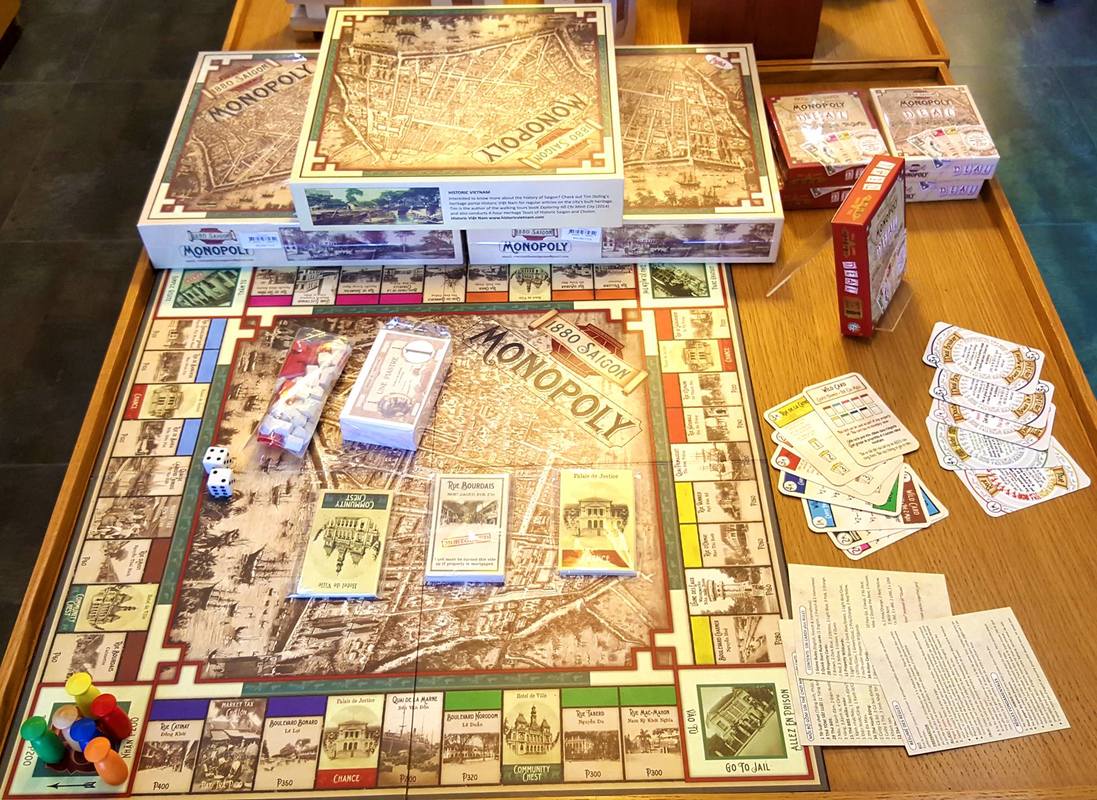
1880 Saigon Monopoly

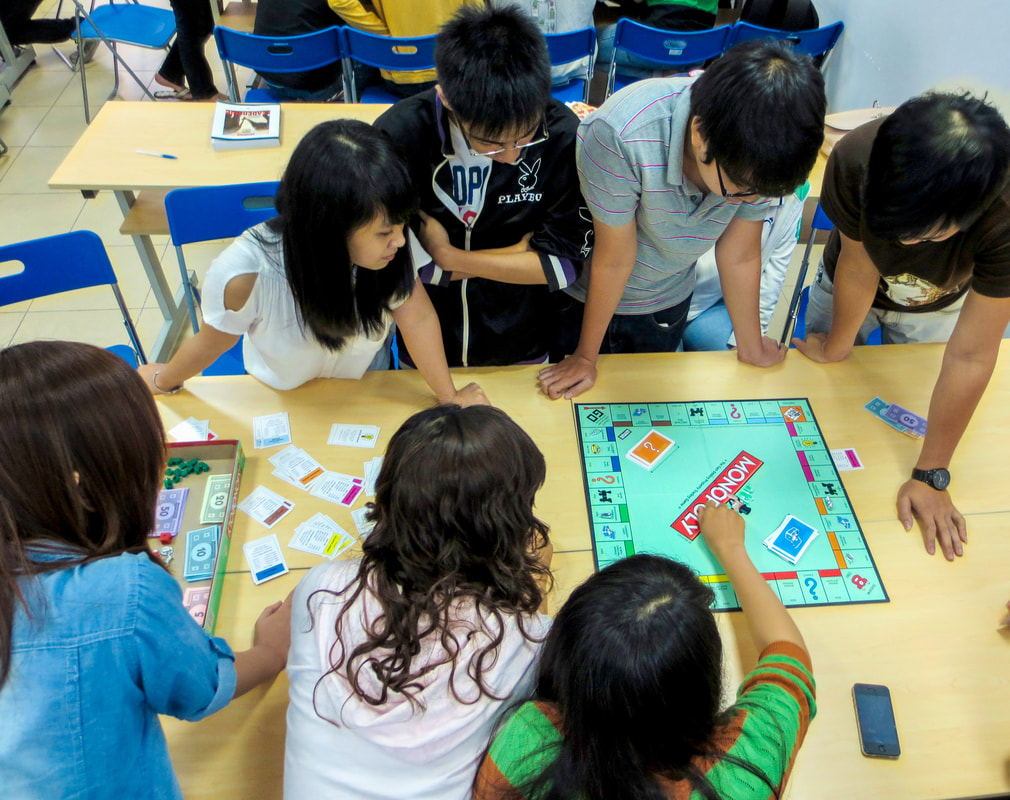
In 2012, I brought four Monopoly games to Vietnam to use for leadership activities in my classes. The students played in teams, four teams per game. Each team selected a leader. Each leader had to use a difference leadership style; autocratic, consensus, laissez-faire, and democratic (i.e., voting on all decisions). The students later wrote about what it was like in their leadership style teams and what they thought about their experiences. At that time, I was warned that I could get in trouble having a Monopoly game in Vietnam.

Last year, I walked into a Ginko (made in Vietnam) store near my Ho Chi Minh City (Saigon) hotel and to my surprise they had a Monopoly game on display at the front of the store - 1880 Saigon Monopoly. I returned later in the afternoon to purchase the beautifully designed game you see above.

The image below is a group of Keuka College business students playing during class to learn about leadership styles in 2013.
Picture
0 Comments

"New Study Shows the Impact of PBL on Student Achievement"

7/20/2017

0 Comments

 
From Edutopia: "New Study Shows the Impact of PBL on Student Achievement."

My research interest, and my teaching, are in higher education. Edutopia generally publishes information for K-12 education, but I have found some of their posts to be insightful and relevant to higher education.

This new article might interest my academic and educator friends with an interest in experiential learning. "PBL" means Project-Based Learning (and sometimes it means Problem-Based Learning).

From the article:
"Researchers in Michigan show that project-based learning in high-poverty communities can produce statistically significant gains in social studies and informational reading."

Here is a link to the new post on Edutopia:
www.edutopia.org/article/new-study-shows-impact-pbl-student-achievement-nell-duke-anne-lise-halvorsen

​
0 Comments

Starting to teach and to study

7/2/2017

0 Comments


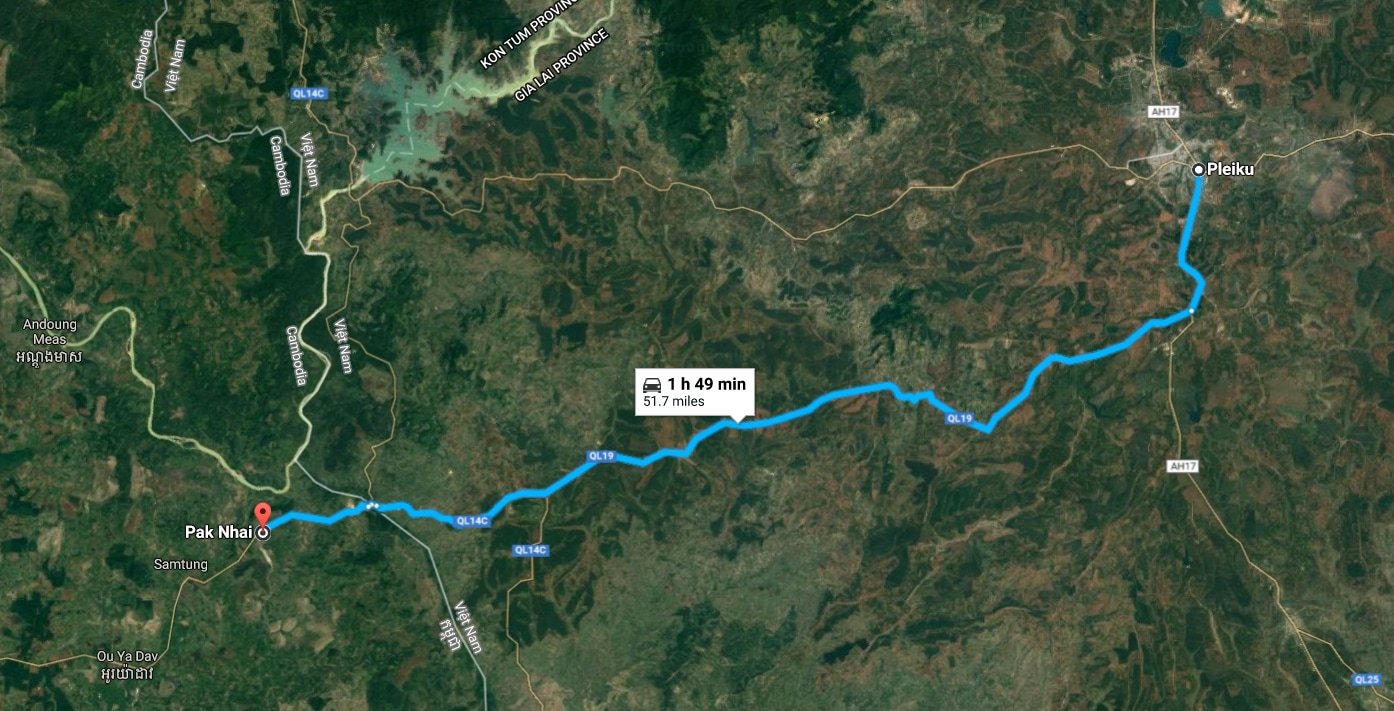
​My current Ph.D. research is deeply personal. I spent a year, from January 1969 until January 1970, in Pleiku, Vietnam, during the Vietnam War. Pleiku is in the Central Highlands, less than 50 miles from the Cambodian border. At the time, it sat squarely on the Ho Chi Minh Trail, the major supply route for the North Vietnamese Army (NVA) into the South, in support of NVA troops and the Vietcong. For about two decades, I had wanted to return. I saw the devastation we created during the war – to the countryside and to the lives of the people. I wanted to see how the Vietnamese were doing. In early 2012, I had an opportunity to travel to Hanoi, Vietnam, to teach business classes for seven weeks for Keuka College. I took that opportunity I have been teaching annually in Hanoi and Ho Chi Minh City (Saigon) since 2012. Finally, I had the opportunity to see Vietnam 40 years after the war, and to give something back to a new generation of Vietnamese business students.

Prior to starting to teach in 2012, I had spent 37 years in business. For most of those years, I was a senior marketing and sales executive, in Fortune 500 and global companies. Teach college business courses came naturally. I had mentored subordinates throughout my career. I had given dozens of business workshops, both in my salaried executive career, and as a consultant from 2001 through 2012.

My instinct, starting with the first Keuka College course I taught, which was a business leadership class, was to incorporate projects for the students that would enable them to apply what they were studying in lectures and in their textbook. After a year of teaching in Vietnam, I realized that I needed to gain a deeper understanding of the processes of teaching and learning, resulting in my enrollment in fall 2013 in the Curriculum, Instruction, and the Science of Learning Ph.D. program within the Graduate School of Business, State University of New York University at Buffalo. I was – and remain – driven to understand the variety of experiential or active learning processes through my Ph.D. studies and subsequent research.

The image below is a screen shot of a Google map showing the route to Cambodia from Pleiku, Vietnam.
Picture
0 Comments

Are factory visits experiential learning?

5/3/2017

0 Comments

 
If asked, I would suggest that a visit to a factory, where students could see examples of the processes about which they are learning, would count as experiential learning (or active learning, as it would be called here in Ho Chi Minh City). I also would admit to an argument that a visit of this type is really just an illustrated lecture. Still, I think that the students will remember what they saw - and experienced - better from the factory visit than from a lecture with photos.

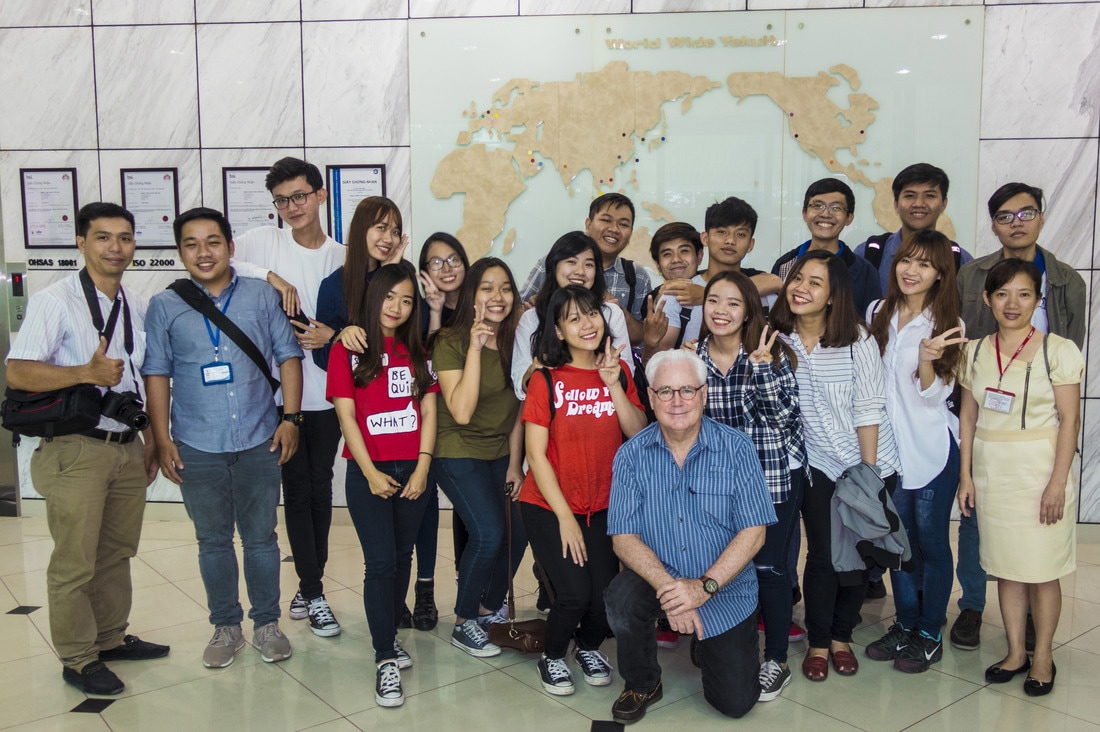
I took my Keuka College Operation & Production Management students to visit the Yakult probiotic drink "factory" yesterday. Really, I would prefer to call it a production facility. It is clean, shiny, and highly automated. The students saw batch processing, which was the making of the probiotic "seed." They saw flow shop example, which was the continuous flow processing of the drink once the probiotic seed was created. They saw a very small number of people producing thousands of drinks per hour. We chatted about what they saw on the bus ride back to the university. I believe the students will remember this trip longer than they will remember the lecture on types of production processes.

The photo is with the students following the tour. Yakult does not permit photography within their production facility.
Picture
0 Comments
<<Previous
    View my profile on LinkedIn

      Subscribe by email

    Subscribe to Newsletter

    Paul McAfee

    My experiential learning Activities blog includes examples from my international teaching experiences. The Research blog includes studies I have read and comments on others' research, as well as my own.

    Read about examples from my teaching college business courses in China, Singapore, the United States, and Vietnam, relating to both experiential learning and project-based learning.

    Please share your questions and thoughts here.

    Archives

    November 2024
    November 2023
    September 2023
    March 2023
    June 2022
    May 2022
    November 2021
    September 2020
    August 2020
    July 2020
    June 2020
    April 2020
    March 2020
    January 2020
    December 2019
    August 2019
    July 2019
    June 2019
    May 2019
    January 2019
    December 2018
    November 2018
    October 2018
    September 2018
    April 2018
    March 2018
    October 2017
    July 2017
    May 2017
    April 2017
    November 2013

    Categories

    All
    Active Learning
    Canisius College
    Daemen College
    Diversity
    Drone Racing
    Experiential Learning
    Generation Z
    Global Strategy
    Higher Education
    Keuka College
    #Luxasia
    Millennials
    Nonbinary Gender Pronouns
    Paul McAfee
    Project Based Learning
    Project-Based Learning
    School Of Management
    Singapore
    STEM
    Strategic Management
    Transgender Terminology
    UNC Asheville
    University At Buffalo
    Vietnam

    RSS Feed

Copyright 2013-2025:
​Dr. Paul H. McAfee
LinkedIn Profile: www.linkedin.com/in/paulmcafee